Removing Hard Water Stains From Faucets
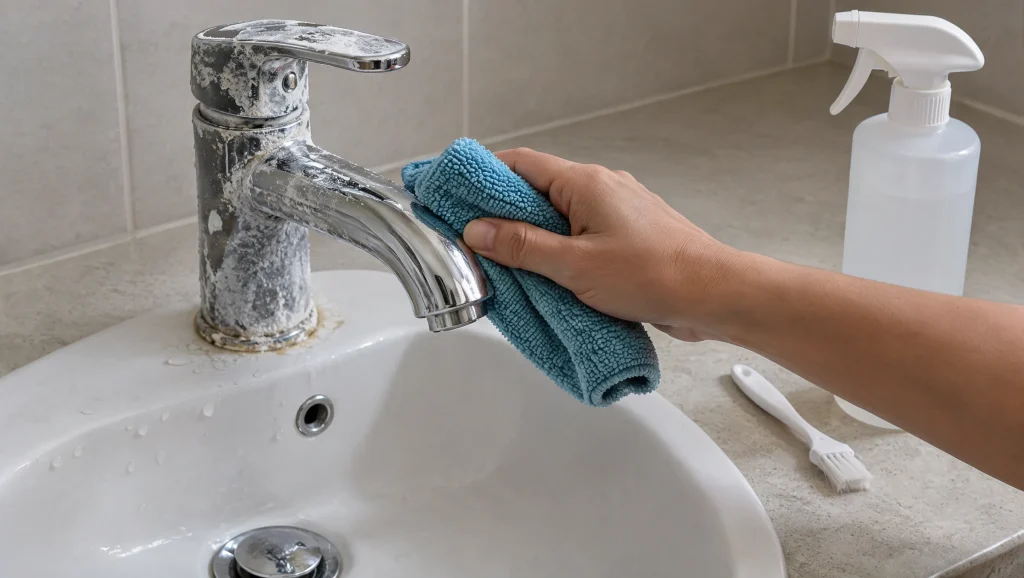
Water stains can make clean kitchen and bathroom faucets look dull and neglected. Those cloudy marks often return after washing, especially when water droplets remain on the surface. Understanding what causes them can help homeowners choose better cleaning methods and protect their fixtures.
Hard Water Stains develop when dissolved minerals, mainly calcium and magnesium, remain on faucet surfaces after water evaporates. Although these deposits can become stubborn over time, suitable cleaning products and regular maintenance can restore the faucet’s appearance. The right approach also depends on the material and finish of each fixture.
Why Hard Water Stains Form
Hard water stains commonly appear in homes where tap water contains high levels of dissolved minerals. As water evaporates, these minerals remain behind and gradually form visible deposits. Understanding this process makes it easier to prevent stubborn buildup.
Regular exposure to mineral-rich water can leave faucets looking cloudy and uneven. According to Sharon O. Skipton, Extension Water Quality Educator at the University of Nebraska–Lincoln, “Hard water isn’t a health hazard but can be a nuisance within the home.” This explains why mineral residue is mainly a household maintenance concern. Mineral Deposit Removal becomes easier when homeowners recognize where buildup develops and address it before deposits become difficult to clean.
Mineral Buildup From Hard Water
Hard water contains dissolved calcium and magnesium that can accumulate on frequently used fixtures. When droplets dry naturally, these minerals remain as chalky deposits around faucet surfaces. Repeated exposure gradually makes the residue more noticeable and difficult to remove.
Common Signs of Faucet Water Stains
White spots, cloudy patches, and rough mineral layers are common signs of hard water buildup. Some faucets may also develop dull areas that remain visible after ordinary wiping. Water Spots After Daily Use often appear around handles, spouts, and faucet bases where droplets collect.
Areas Prone to Mineral Deposits
Certain faucet areas collect more mineral residue because they experience frequent water contact. The spout openings, handle joints, and faucet bases are common places for buildup. Aerators can also collect minerals that gradually restrict water flow.
Effective Faucet Cleaning Methods
Choosing a suitable cleaning method helps remove mineral residue without unnecessarily damaging faucet surfaces. Mild household ingredients can work for compatible finishes, while commercial products offer additional options. Always check the manufacturer’s cleaning recommendations before starting.
Brian Benham and Erin Ling, Extension Specialists at Virginia Tech, explain that “Water exceeding about 7 to 8 grains per gallon (gpg) or approximately 120 milligrams per liter (mg/L) of hardness may interfere with the cleaning action of soaps and detergents and may cause mineral deposits (scale) on dishes, appliances, and plumbing fixtures.” This highlights why appropriate cleaning and maintenance matter in homes with hard water.
Using White Vinegar for Mineral Deposits
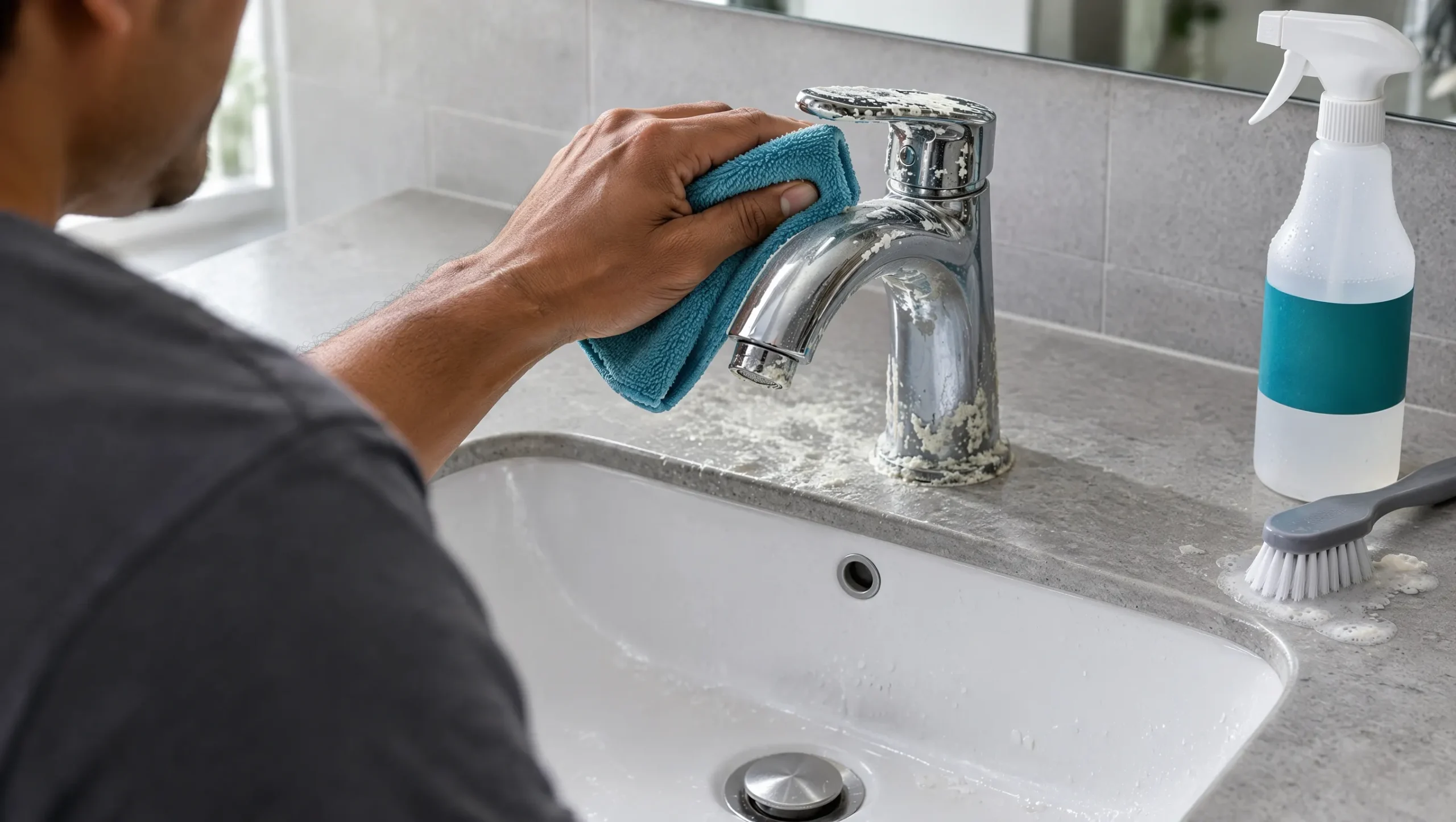
White vinegar diluted with water can help loosen mineral deposits on compatible faucet finishes. Mix equal parts vinegar and water, then apply the solution with a soft cloth. Rinse thoroughly afterward and dry the faucet to prevent additional water spots.
Removing Stubborn Stains With Baking Soda
Baking soda mixed with water creates a mild paste that can help address persistent residue on suitable surfaces. Apply a small amount using a soft, damp cloth without scrubbing aggressively. Rinse the faucet completely and dry it with a clean microfiber cloth.
Choosing Safe Faucet Cleaners
Commercial faucet cleaners can help remove mineral residue when household ingredients are unsuitable. However, their formulas should match the faucet’s material and protective coating. Avoid harsh chemicals and abrasive cleaning pads that may scratch or discolor the finish.
Protecting Different Faucet Surfaces
Different faucet materials require different cleaning approaches to maintain their appearance. A product that works on one finish may damage another, particularly when decorative coatings are involved. Checking the manufacturer’s instructions helps homeowners avoid unnecessary surface damage.
Cleaning Chrome and Stainless Steel Faucets
Chrome faucets generally respond well to mild dish soap and warm water. Stainless steel fixtures also benefit from gentle cleaning with a soft microfiber cloth. Avoid rough sponges and abrasive products that can scratch or dull their surfaces.
Caring for Brass and Bronze Finishes
Brass and bronze faucets need extra attention because certain cleaners can affect their decorative finishes. Use a soft cloth and a mild cleaning solution approved by the manufacturer. Avoid acidic products and abrasive materials unless the care instructions specifically permit them.
Cleaning Aerators and Hidden Areas
Aerators can collect mineral particles that gradually reduce water flow. If the manufacturer allows removal, carefully detach the component and clean it according to the fixture’s instructions. Use a soft brush for accessible deposits, then rinse and reinstall the aerator correctly.
Keep Your Faucets Clean With Regular Care
Keeping faucets clean does not require complicated maintenance or expensive cleaning products. Wiping away water droplets after each use helps prevent minerals from settling and forming visible deposits. Regularly cleaning faucet bases, handles, and aerators also reduces the chance of stubborn buildup. If stains continue returning, checking household water hardness may help identify the underlying cause. Choosing suitable cleaning products and following finish-specific care instructions can also extend the appearance of your fixtures. Start practicing these simple habits to keep your faucets cleaner and looking their best.