Fixing Loose Door Hinges at Home
A door that rattles, sticks, or refuses to close properly can quickly become frustrating. These problems often develop gradually as screws loosen, hinge plates shift, or everyday use puts pressure on the hardware. Fortunately, simple inspections and timely repairs can help restore smooth door movement.
Loose Door Hinges are a common cause of uneven doors, unwanted movement, and alignment problems. By checking the screws, examining damaged holes, and identifying worn hardware, homeowners can determine which repairs are necessary. Understanding these issues also helps prevent minor hinge problems from becoming more complicated.
Why Door Hinges Become Loose
Door hinges support the weight of a door while allowing it to open and close repeatedly. Over time, regular movement, environmental changes, and aging hardware can weaken their connection to the door and frame. Recognizing these problems early makes it easier to choose the right repair.
Loose Door Hinges Are Common, particularly on frequently used bedroom, bathroom, and entryway doors. Wooden frames can also change with humidity, affecting how securely screws remain in place. Understanding these causes helps homeowners identify why a door suddenly starts moving unevenly.
Causes of Loose Hinge Screws
Repeated opening and closing can gradually loosen hinge screws, especially when a door is heavy or frequently used. Changes in humidity may also cause wooden doors and frames to expand or contract, affecting screw stability. Improper installation and screws that are too short can create similar problems over time.
Signs of Worn Hinges and Screw Holes
A loose hinge often produces visible signs, including protruding screws, moving hinge plates, and gaps between the hardware and wooden surface. Homeowners may also notice that a screw keeps turning without becoming tighter. This usually indicates a stripped screw hole where the surrounding wood no longer provides enough grip.
Effects on Door Alignment
Loose hinges can cause a door to hang unevenly or rub against the frame when opening and closing. The gaps around the door may become inconsistent, making it difficult for the latch to meet the strike plate correctly. Carpenter Tom Silva explains, “When doors close without our help, it means their top and center hinges aren’t plumb.” This highlights the importance of checking hinge positioning when diagnosing alignment problems.
Inspecting and Tightening Door Hinges
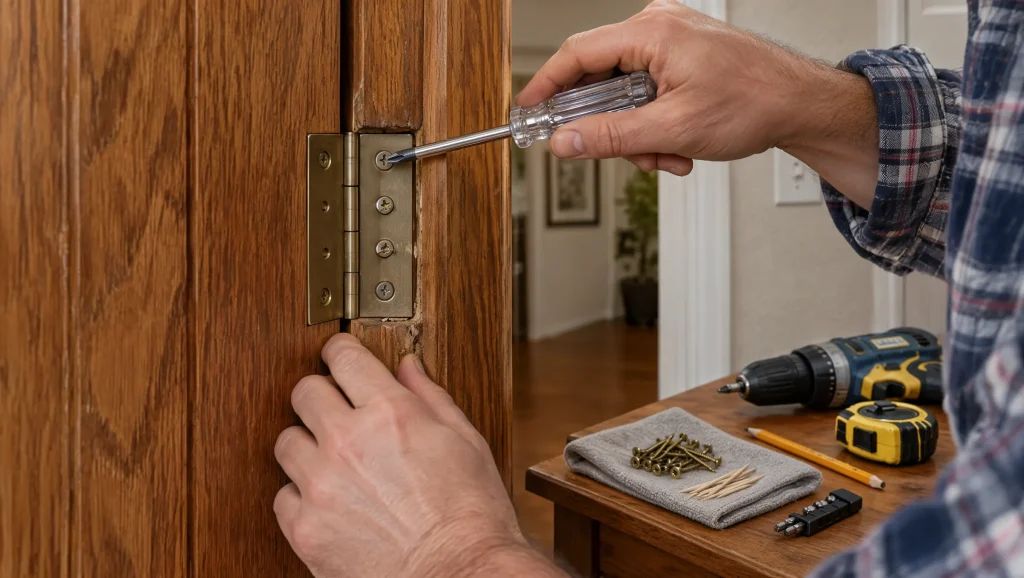
A careful inspection helps determine whether the problem involves loose screws, damaged holes, or worn hardware. Before making adjustments, examine both sides of each hinge and check whether the door remains properly supported. Having a suitable screwdriver ready can make the inspection and repair process more manageable.
Hinge Screw Tightening is often the simplest solution when the hardware remains in good condition. However, tightening should be done carefully to avoid damaging the screw heads or surrounding wood. Check each mounting point before deciding whether additional repairs are necessary.
Checking Hinge Plates and Screws
Open the door carefully and examine the hinge plates attached to both the door and frame. Look for missing screws, visible gaps, rust, bent metal, or movement around the mounting points. Check whether the screws sit evenly inside their holes, as loose connections may allow the hinge plate to shift.
Tightening Screws Without Damage
Use a screwdriver that matches the screw head to prevent slipping and damaging the hardware. Turn each loose screw gradually until the hinge plate sits firmly against the surface. Avoid overtightening because excessive pressure can damage wooden screw holes or affect hinge positioning.
Repairing Stripped Screw Holes
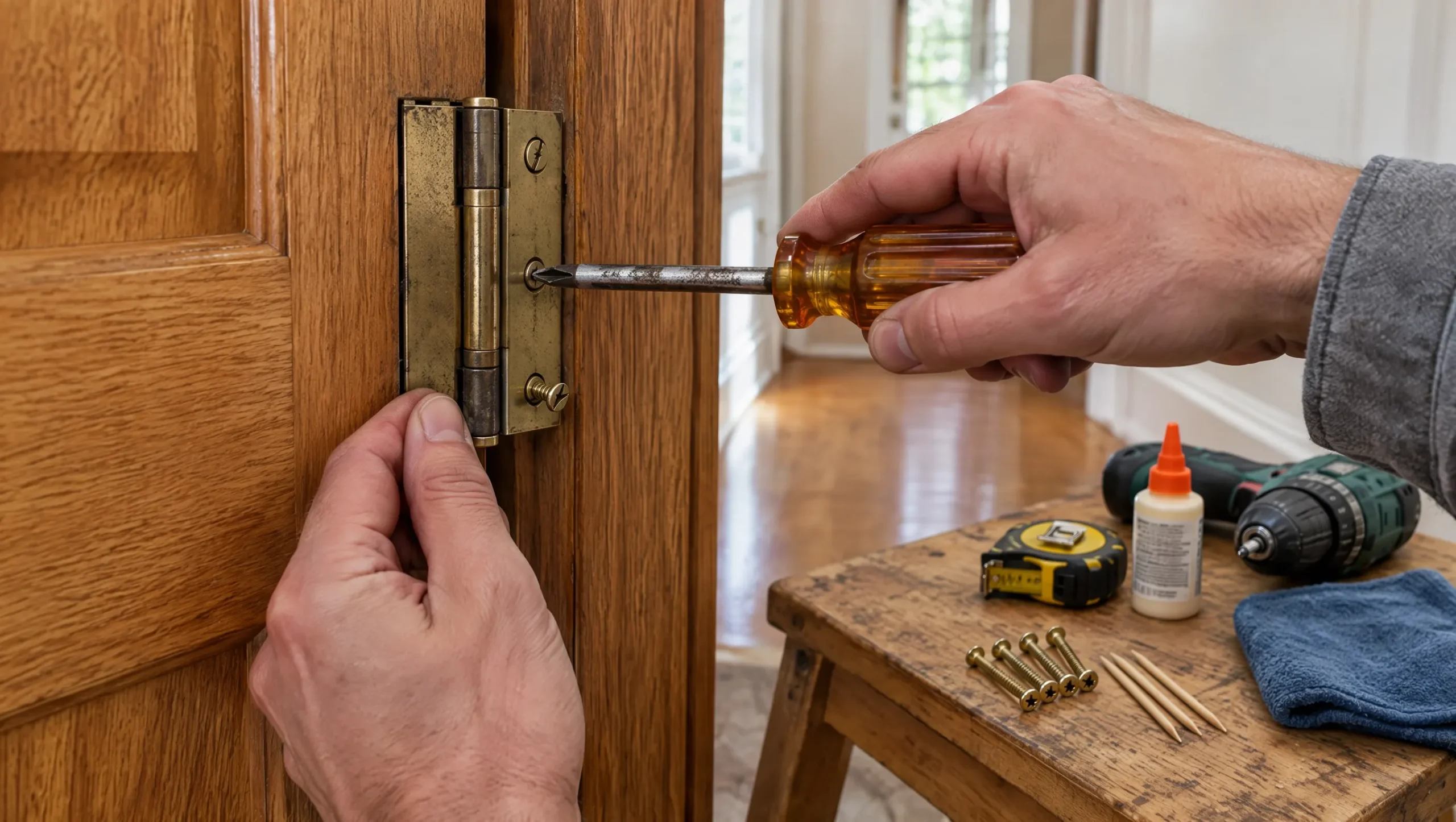
When a screw cannot grip the surrounding wood, simply tightening it again will not solve the problem. Minor damage may require reinforcing the hole with wood glue and suitable wooden plugs before reinstalling the screw. Allow the repair materials to cure according to their instructions before checking the connection.
Adjusting or Replacing Damaged Hinges
After tightening the screws, check whether the door still hangs correctly. Some problems involve more than loose connections, so additional adjustments or replacement hardware may be necessary. Choosing the right solution depends on the condition of the hinges, door weight, and surrounding frame.
Door Frame Adjustment can help address uneven gaps and doors that no longer sit properly within their openings. However, not every alignment issue can be corrected by repositioning hinge plates. A careful assessment helps prevent unnecessary replacements and further hardware damage.
Adjusting Door Frame Alignment
Uneven gaps around the door may indicate that the hinges or frame need adjustment. Repositioning hinge plates can sometimes help the door sit more evenly and move without rubbing against the frame. If the frame appears warped or structurally damaged, consult a qualified professional rather than forcing the hinges into position.
When to Replace Worn Hinges
Not every loose hinge needs replacement, but visibly damaged hardware should not be ignored. Bent plates, badly worn hinge pins, corrosion, and persistent movement may indicate that new hinges are necessary. Carpenter Nathan Gilbert emphasizes the importance of proper screw installation, as protruding screw heads can interfere with hinge movement.
Choose replacement hinges that match the original size, mounting arrangement, and door weight requirements. For heavy or exterior doors, professional installation can help ensure reliable support. Replacing damaged hardware is often more effective than repeatedly tightening components that no longer function properly.
Testing Door Movement After Repairs
After completing the repairs, check whether the door opens and closes smoothly without scraping or sticking. Examine the gaps around its edges and make sure the latch aligns correctly with the strike plate. Listen for unusual noises and watch for movement around the hinge plates to identify any remaining problems.
Restore Smooth Door Movement With Simple Repairs
Loose hinges can affect everyday comfort, but early inspections and appropriate repairs can prevent minor problems from becoming more complicated. Tightening suitable screws, repairing damaged holes, and replacing worn hardware can help maintain a properly functioning door. Even small improvements can make everyday door operation noticeably smoother.